
Buildings account for around 30% of global final energy consumption. In its 2026 Special Report on Buildings Efficiency, the International Energy Agency identifies better building envelopes as a major contributor to reducing energy demand. For contractors and building materials distributors, exterior insulation offers a practical way to address that demand.
Rock wool can reduce heating and cooling requirements while providing durable insulation. Its sustainability also depends on manufacturing methods, installation quality, and the recovery options available when a facade reaches the end of its service life.
Rock wool, also called stone wool, contains mineral fibers that hold air and slow heat transfer. Suitable boards installed outside the structural wall create a continuous insulation layer, limiting winter heat loss and summer heat gain.
Continuous exterior insulation also reduces thermal bridging through structural elements. The US Department of Energy recommends this approach for most buildings. Contractors still need to address slab edges, window openings, and conductive fixings to achieve the intended performance.
Lower energy demand can reduce operational carbon emissions. Actual savings depend on the existing wall, local climate, and heating or cooling equipment. Project calculations provide a sounder basis for customer proposals than a universal percentage claim.
Durable insulation can deliver energy savings for years without replacement. On exterior walls, this also reduces the need to remove finishes and erect scaffolding to access failed materials.
Research published through SINTEF examined reclaimed mineral wool samples between 5 and 30 years old. The samples generally retained adequate thermal performance when protected within the building envelope and kept away from prolonged moisture or dust exposure.
Mineral wool is vapor permeable and can support drying within an appropriately designed wall. Rain protection and moisture control remain necessary. Protecting boards during storage and coordinating insulation with flashings helps preserve their performance after installation.
Rock wool production involves melting mineral raw materials, forming fibers, and curing the product. These processes consume energy, so factory efficiency and energy sources affect the environmental footprint.
Recycled inputs can reduce demand for virgin materials. Eurima describes the use of secondary raw materials in stone wool production and the return of manufacturing offcuts to the process. Buyers should request recycled-content information for the specific product, since proportions vary between factories and product ranges.
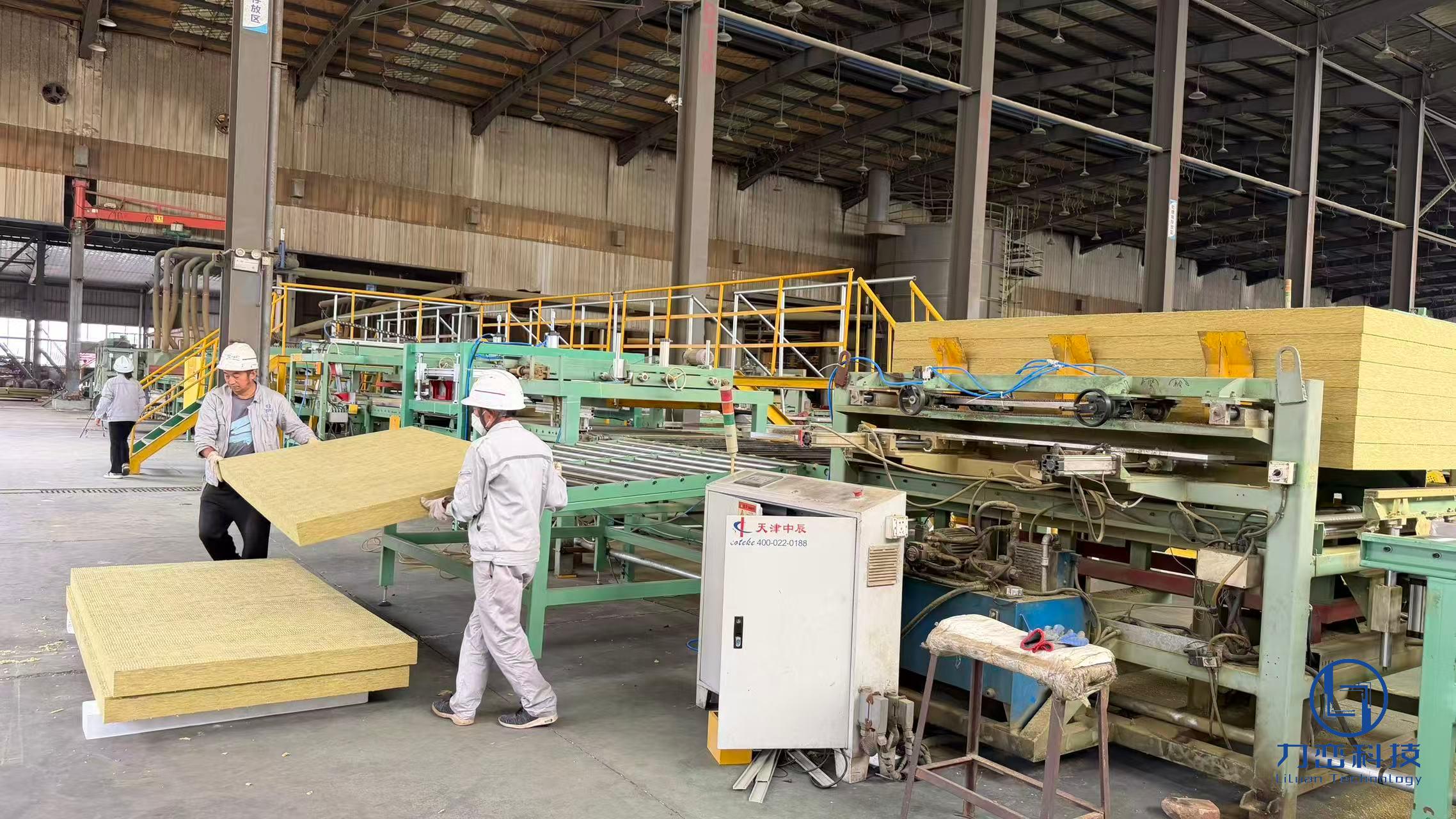
Rock wool board production at LiLuan Technology.
An Environmental Product Declaration, or EPD, provides independently verified environmental information. Having an EPD does not automatically make a product environmentally superior.
Compare products at equivalent thermal performance over the same wall area and service period. Assessments should use consistent life cycle boundaries and account for transport, installation and disposal alongside production.
Stone wool can be recycled into new insulation. Actual recovery depends on collection services and material condition; demolition waste mixed with render or adhesive is harder to process than clean factory offcuts.
Before installation, contractors should identify a receiving facility and confirm its acceptance requirements. Separating offcuts at the site makes recovery easier where suitable services exist.
Distributors can help by passing on product identification and handling guidance. Sustainability proposals should describe the recovery route available in the destination market, rather than assume every project has access to recycling.
For overseas buyers, protecting boards during shipping helps avoid waste. Damaged material may need replacement, adding manufacturing and transport impacts. Packaging should protect edges and stabilize loads while remaining manageable at the destination.
Review pack dimensions and container quantities alongside the insulation specification. Efficient loading needs to preserve board shape and condition. Clear pack identification also helps distributors allocate stock across projects with less unnecessary handling.
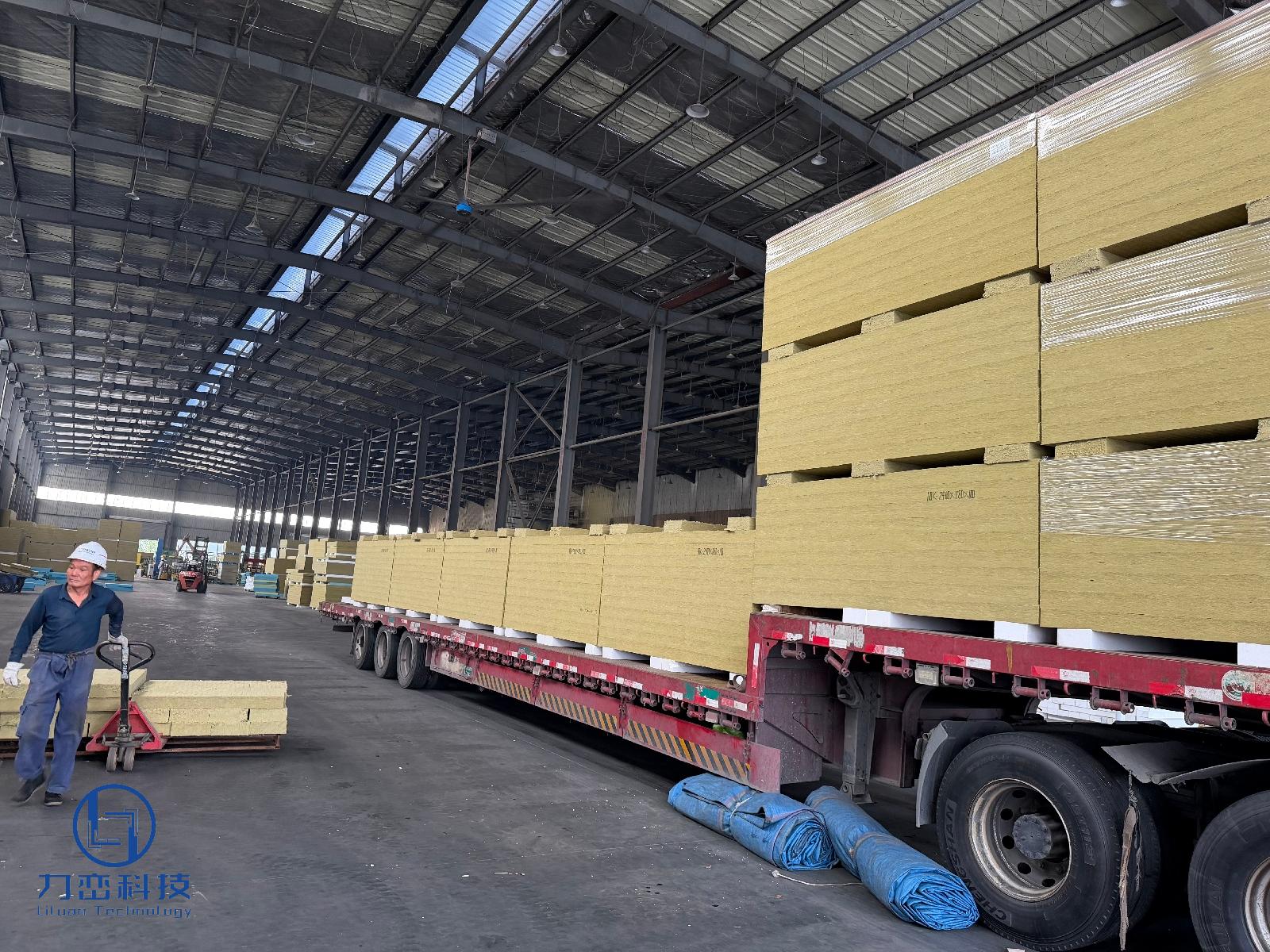
Packaged rock wool boards prepared for shipment by LiLuan Technology.
LiLuan Technology supplies rock wool boards for External Thermal Insulation Composite Systems, commonly known as ETICS. Its LL-RWBS-02 listing includes standard dimensions of 1200 × 600 mm, thicknesses from 80 to 200 mm, and densities from 120 to 200 kg/m³. Customization is available.
Contractors can use these options as a starting point for facade specifications. Final selection should match the required thermal and mechanical performance, with compatibility confirmed for the selected adhesive, fixings, and render.
For distributors, agreeing specifications and packing quantities before ordering helps build a consistent product range for local customers. Projects requiring environmental documentation should request it for the selected board and production source.
To discuss a facade project or distribution order, contact LiLuan Technology. Send the wall system, required thermal performance, and estimated quantity, together with the project location and destination port, to request suitable specifications and a quotation.
